Gaza Ceasefire: Hamas Agrees to Latest Proposal
Gaza on the Brink: A Breakthrough Deal – But Will It Hold?
Imagine a flicker of peace illuminating a landscape scarred by 22 brutal months of conflict. After relentless diplomacy, an astonishing development has emerged from the shadows: **Hamas has reportedly agreed to the latest regional proposal for a Gaza ceasefire and hostage release deal with Israel.** This isn't just news; it's a potential turning point, confirmed by a source within the Palestinian armed group to the BBC.
But in the volatile heart of the Middle East, even breakthroughs are fraught with tension. The world now holds its breath, waiting for Israel's definitive response. Will this long-awaited agreement finally silence the guns, or is it just another twist in a story of endless conflict?
A Glimmer of Hope? Hamas Accepts Ceasefire Terms
 The air in Cairo, bustling with high-stakes diplomacy, has been thick with anticipation. Now, a senior Hamas official has confirmed their delegation, led by chief negotiator Khalil al-Hayya, has formally accepted the ceasefire proposal. This pivotal plan, largely mirroring a framework crafted by US envoy Steve Witkoff in June, could reshape the future of Gaza.
**Here’s what the proposed deal entails:**
* **Hostage Release:** Hamas would free approximately half of the 50 remaining Israeli hostages – 20 of whom are believed to still be alive. This would occur in two carefully managed batches.
* **Initial Truce:** An initial 60-day pause in fighting, offering a crucial window of relief to the shattered region.
* **Path to Peace:** Crucially, this preliminary truce is designed to pave the way for serious negotiations on a permanent ceasefire, aiming for a lasting end to hostilities.
This agreement marks a significant shift, especially considering Hamas had previously rejected a similar offer. Mediators from Egypt and Qatar have been working tirelessly, with Qatar’s Prime Minister Sheikh Mohammed bin Abdul Rahman Al Thani even visiting Cairo to "apply maximum pressure" on both sides. The urgency is palpable, the stakes immense.
The air in Cairo, bustling with high-stakes diplomacy, has been thick with anticipation. Now, a senior Hamas official has confirmed their delegation, led by chief negotiator Khalil al-Hayya, has formally accepted the ceasefire proposal. This pivotal plan, largely mirroring a framework crafted by US envoy Steve Witkoff in June, could reshape the future of Gaza.
**Here’s what the proposed deal entails:**
* **Hostage Release:** Hamas would free approximately half of the 50 remaining Israeli hostages – 20 of whom are believed to still be alive. This would occur in two carefully managed batches.
* **Initial Truce:** An initial 60-day pause in fighting, offering a crucial window of relief to the shattered region.
* **Path to Peace:** Crucially, this preliminary truce is designed to pave the way for serious negotiations on a permanent ceasefire, aiming for a lasting end to hostilities.
This agreement marks a significant shift, especially considering Hamas had previously rejected a similar offer. Mediators from Egypt and Qatar have been working tirelessly, with Qatar’s Prime Minister Sheikh Mohammed bin Abdul Rahman Al Thani even visiting Cairo to "apply maximum pressure" on both sides. The urgency is palpable, the stakes immense.
 Israel's Response: A Tense Silence and Escalating Offensive
While Hamas's agreement offers a beacon of hope, a profound shadow of uncertainty hangs over Jerusalem. Prime Minister Benjamin Netanyahu’s office has previously stated a firm condition: **all Israeli hostages must be released "in one go."** This stance directly conflicts with the proposed staggered release.
In a video released after reports of Hamas's approval, Netanyahu remained notably silent on the deal itself, offering only a cryptic observation: "From them you can get one impression – Hamas is under immense pressure." What does this mean for the future of the agreement?
Meanwhile, on the ground, the Israeli military shows no signs of relenting. Lt Gen Eyal Zamir, the Israeli chief of staff, declared the 22-month war at a "turning point," with an intensified "focus on enhancing the strikes against Hamas in Gaza City." This declaration isn't just rhetoric; it's being felt acutely:
Israel's Response: A Tense Silence and Escalating Offensive
While Hamas's agreement offers a beacon of hope, a profound shadow of uncertainty hangs over Jerusalem. Prime Minister Benjamin Netanyahu’s office has previously stated a firm condition: **all Israeli hostages must be released "in one go."** This stance directly conflicts with the proposed staggered release.
In a video released after reports of Hamas's approval, Netanyahu remained notably silent on the deal itself, offering only a cryptic observation: "From them you can get one impression – Hamas is under immense pressure." What does this mean for the future of the agreement?
Meanwhile, on the ground, the Israeli military shows no signs of relenting. Lt Gen Eyal Zamir, the Israeli chief of staff, declared the 22-month war at a "turning point," with an intensified "focus on enhancing the strikes against Hamas in Gaza City." This declaration isn't just rhetoric; it's being felt acutely:
 * **Surprise Advance:** Witnesses in Gaza City reported a surprise advance of Israeli tanks, backed by air and artillery strikes, into the southern Sabra neighborhood.
* **Trapped Civilians:** These forces have surrounded schools and a UN-run clinic, facilities sheltering hundreds of displaced people, compounding their terror and uncertainty.
Later this week, the Israeli cabinet is expected to approve a full military plan to occupy Gaza City, a move that would drastically escalate an already dire situation. Netanyahu has already signaled Israel’s intention to widen its offensive and conquer all of Gaza, including areas where most of its 2.1 million Palestinian residents have sought refuge. The question isn't *if* Israel will respond, but *how* – and what that response will mean for this fragile ceasefire.
Gaza's Ordeal: A Humanitarian Catastrophe Deepens
Beyond the political maneuvers and military strategies, Gaza remains a humanitarian catastrophe of unimaginable scale. Egyptian Foreign Minister Badr Abdelatty, speaking from the Rafah border crossing where vital aid trucks sit in ghostly silence, stressed the urgent need for a ceasefire. He described the situation on the ground as "beyond imagination."
* **Surprise Advance:** Witnesses in Gaza City reported a surprise advance of Israeli tanks, backed by air and artillery strikes, into the southern Sabra neighborhood.
* **Trapped Civilians:** These forces have surrounded schools and a UN-run clinic, facilities sheltering hundreds of displaced people, compounding their terror and uncertainty.
Later this week, the Israeli cabinet is expected to approve a full military plan to occupy Gaza City, a move that would drastically escalate an already dire situation. Netanyahu has already signaled Israel’s intention to widen its offensive and conquer all of Gaza, including areas where most of its 2.1 million Palestinian residents have sought refuge. The question isn't *if* Israel will respond, but *how* – and what that response will mean for this fragile ceasefire.
Gaza's Ordeal: A Humanitarian Catastrophe Deepens
Beyond the political maneuvers and military strategies, Gaza remains a humanitarian catastrophe of unimaginable scale. Egyptian Foreign Minister Badr Abdelatty, speaking from the Rafah border crossing where vital aid trucks sit in ghostly silence, stressed the urgent need for a ceasefire. He described the situation on the ground as "beyond imagination."
 The statistics paint a grim picture of shattered lives:
* **Mass Displacement:** Most of Gaza’s population has been displaced multiple times, fleeing from one danger zone to another.
* **Infrastructure Collapse:** Over 90% of homes are estimated to be damaged or destroyed. Healthcare, water, sanitation, and hygiene systems have all crumbled.
* **Famine Looms:** UN-backed global food security experts warn that the "worst-case scenario of famine is currently playing out" due to critical food shortages.
* **Malnutrition Deaths:** The Hamas-run health ministry reported five more deaths from malnutrition in just 24 hours, including two children, bringing the total to 263 since the war began.
As BBC Chief International Correspondent Lyse Doucet highlighted, the sight of aid trucks awaiting clearance at Rafah is a stark reminder of the suffering unfolding within the besieged territory. For the people of Gaza, this ceasefire isn't just about politics; it’s about survival.
Voices for Peace vs. Calls for Confrontation
The statistics paint a grim picture of shattered lives:
* **Mass Displacement:** Most of Gaza’s population has been displaced multiple times, fleeing from one danger zone to another.
* **Infrastructure Collapse:** Over 90% of homes are estimated to be damaged or destroyed. Healthcare, water, sanitation, and hygiene systems have all crumbled.
* **Famine Looms:** UN-backed global food security experts warn that the "worst-case scenario of famine is currently playing out" due to critical food shortages.
* **Malnutrition Deaths:** The Hamas-run health ministry reported five more deaths from malnutrition in just 24 hours, including two children, bringing the total to 263 since the war began.
As BBC Chief International Correspondent Lyse Doucet highlighted, the sight of aid trucks awaiting clearance at Rafah is a stark reminder of the suffering unfolding within the besieged territory. For the people of Gaza, this ceasefire isn't just about politics; it’s about survival.
Voices for Peace vs. Calls for Confrontation
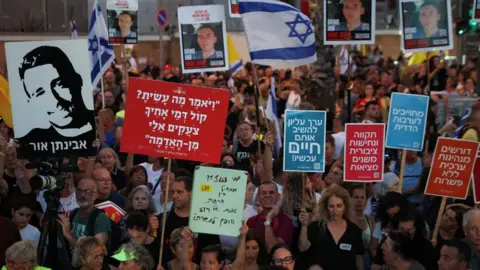 Amidst the geopolitical chess game, the desperate pleas for an end to the violence resonate globally.
* **Israeli Protesters:** In Tel Aviv, hundreds of thousands of Israelis gathered, demanding their government accept a deal *now* and bring all hostages home. "I'm scared that my son would be hurt," pleaded Dani Miran, whose 48-year-old son Omri has been held captive for 682 agonizing days. Their fear is palpable: another offensive in Gaza City could endanger those held there. Yet, Netanyahu accused these demonstrators of hardening Hamas’s negotiating position.
* **Palestinian Protesters:** In Gaza City, Palestinians also protested, crying out for an immediate end to the war. "Hamas and its demands, and the demands being negotiated, do not represent me. I want to live in peace. I want peace of mind. Our only demand is peace and safety for our children," one woman told a local freelance journalist working for the BBC.
* **Global Opinions:** Former US President Donald Trump offered a starkly different perspective on social media: "We will only see the return of the remaining hostages when Hamas is confronted and destroyed!!!" His view underscores the deep divisions that complicate any path to resolution.
The Unbridgeable Chasm? Core Demands and the Path Forward
The war ignited on October 7, 2023, after a Hamas-led attack killed about 1,200 people in southern Israel and saw 251 others taken hostage. Since then, at least 62,004 people have been killed in Gaza, according to the territory's Hamas-run health ministry. The core demands of both sides remain starkly divergent:
Amidst the geopolitical chess game, the desperate pleas for an end to the violence resonate globally.
* **Israeli Protesters:** In Tel Aviv, hundreds of thousands of Israelis gathered, demanding their government accept a deal *now* and bring all hostages home. "I'm scared that my son would be hurt," pleaded Dani Miran, whose 48-year-old son Omri has been held captive for 682 agonizing days. Their fear is palpable: another offensive in Gaza City could endanger those held there. Yet, Netanyahu accused these demonstrators of hardening Hamas’s negotiating position.
* **Palestinian Protesters:** In Gaza City, Palestinians also protested, crying out for an immediate end to the war. "Hamas and its demands, and the demands being negotiated, do not represent me. I want to live in peace. I want peace of mind. Our only demand is peace and safety for our children," one woman told a local freelance journalist working for the BBC.
* **Global Opinions:** Former US President Donald Trump offered a starkly different perspective on social media: "We will only see the return of the remaining hostages when Hamas is confronted and destroyed!!!" His view underscores the deep divisions that complicate any path to resolution.
The Unbridgeable Chasm? Core Demands and the Path Forward
The war ignited on October 7, 2023, after a Hamas-led attack killed about 1,200 people in southern Israel and saw 251 others taken hostage. Since then, at least 62,004 people have been killed in Gaza, according to the territory's Hamas-run health ministry. The core demands of both sides remain starkly divergent:
 * **Israel's Stance:** Netanyahu insists the war will only end once all hostages are released, Hamas is disarmed, Gaza is demilitarized, kept under Israeli security control, and run by an administration not linked to Hamas or the Palestinian Authority.
* **Hamas's Stance:** Hamas calls for a comprehensive deal, demanding an exchange of all hostages for Palestinian prisoners in Israeli jails, a complete end to the war, and the full withdrawal of Israeli forces from Gaza. They vow not to disarm unless an independent Palestinian state is created.
With Hamas now accepting a deal that Israel has previously balked at, the world watches with bated breath. Will this latest flicker of hope ignite a true path to peace and alleviate the immense suffering in Gaza, or will the flames of conflict continue to engulf the region? The answer, as ever, hangs in a delicate, dangerous balance.
* **Israel's Stance:** Netanyahu insists the war will only end once all hostages are released, Hamas is disarmed, Gaza is demilitarized, kept under Israeli security control, and run by an administration not linked to Hamas or the Palestinian Authority.
* **Hamas's Stance:** Hamas calls for a comprehensive deal, demanding an exchange of all hostages for Palestinian prisoners in Israeli jails, a complete end to the war, and the full withdrawal of Israeli forces from Gaza. They vow not to disarm unless an independent Palestinian state is created.
With Hamas now accepting a deal that Israel has previously balked at, the world watches with bated breath. Will this latest flicker of hope ignite a true path to peace and alleviate the immense suffering in Gaza, or will the flames of conflict continue to engulf the region? The answer, as ever, hangs in a delicate, dangerous balance.
Image 1
Image 2
Image 3
Image 4
Image 5
Image 6


Comments
Post a Comment