Anas al-Sharif: Al Jazeera Journalist Killed by Israel in Gaza
The Unbreakable Lens: How Anas al-Sharif Became Gaza's Last Voice — And Why It Matters
Imagine a battlefield where the truth itself is a target. Where the act of reporting can cost you everything. In Gaza, nearly 200 journalists have paid that ultimate price. Among them was **Anas al-Sharif**, a 28-year-old **Al Jazeera correspondent** whose lens, courage, and relentless dedication painted the raw, human story of a war-torn land. His life, along with four of his Al Jazeera colleagues, was tragically cut short in an Israeli strike, igniting a global outcry and forcing us to confront a chilling question: **who will tell the story when the storytellers are silenced?**
The Strike That Shook the World
 On a grim Sunday, a tent used by **media workers** in Gaza City, a sanctuary for those striving to bring vital information to the world, became a death trap. An Israeli strike ripped through it, claiming the lives of five dedicated **Al Jazeera journalists**. Beyond Anas al-Sharif, we mourn Mohammed Qreiqeh, a fellow correspondent, and cameramen Ibrahim Zaher, Mohammed Noufal, and Moamen Aliwa. Two other individuals also perished, including local **freelance journalist** Mohammed al-Khaldi.
This targeted attack on the very pulse of **Gaza war reporting** immediately drew fierce international condemnation. From the halls of the UN to Al Jazeera's home in Qatar and powerful media freedom groups, the message was clear: such actions undermine the fundamental principles of **press freedom** and accountability. But the controversy surrounding Anas al-Sharif’s death runs even deeper.
Anas al-Sharif: A Life Lived for Truth
On a grim Sunday, a tent used by **media workers** in Gaza City, a sanctuary for those striving to bring vital information to the world, became a death trap. An Israeli strike ripped through it, claiming the lives of five dedicated **Al Jazeera journalists**. Beyond Anas al-Sharif, we mourn Mohammed Qreiqeh, a fellow correspondent, and cameramen Ibrahim Zaher, Mohammed Noufal, and Moamen Aliwa. Two other individuals also perished, including local **freelance journalist** Mohammed al-Khaldi.
This targeted attack on the very pulse of **Gaza war reporting** immediately drew fierce international condemnation. From the halls of the UN to Al Jazeera's home in Qatar and powerful media freedom groups, the message was clear: such actions undermine the fundamental principles of **press freedom** and accountability. But the controversy surrounding Anas al-Sharif’s death runs even deeper.
Anas al-Sharif: A Life Lived for Truth
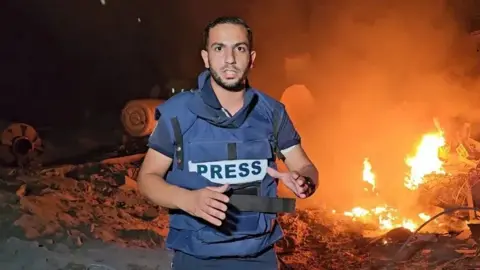
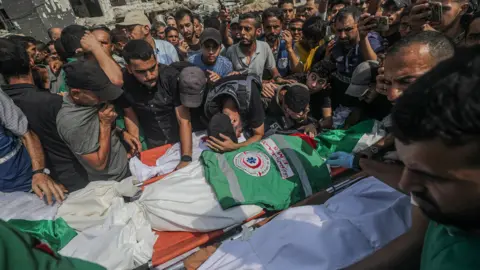 Born in the densely populated Jabalia area, Anas wasn't just an **Al Jazeera journalist**; he was a son of Gaza, deeply embedded in its struggles. For two harrowing years, he chronicled the unfolding catastrophe, becoming one of the network's most prominent reporters. Salah Negm, director of news at Al Jazeera English, described him as a man who "worked for the whole length of the war inside Gaza, reporting daily on the situation of people and the attacks which are committed in Gaza."
What kind of courage does it take to stay when everyone is fleeing? Anas, married with a four-year-old daughter, Sham, and a one-year-old son, Salah, made that agonizing choice. He refused Israeli evacuation orders, instead choosing to report from the north, separated from his family for agonizing stretches. A poignant Instagram post revealed his first meeting with his son, Salah, after 15 months of war – a fleeting moment of joy amidst unimaginable hardship.
Anas’s reports were more than just news; they were urgent dispatches from the precipice, often appearing live, capturing the raw desperation of a besieged population. He even reported on the targeting of his own colleagues, a grim foreshadowing of his fate. His own father had been killed in an Israeli strike just months earlier. Hours before his death, Anas himself posted about the intense bombardment of Gaza City, a chilling testament to his unflinching commitment.
Born in the densely populated Jabalia area, Anas wasn't just an **Al Jazeera journalist**; he was a son of Gaza, deeply embedded in its struggles. For two harrowing years, he chronicled the unfolding catastrophe, becoming one of the network's most prominent reporters. Salah Negm, director of news at Al Jazeera English, described him as a man who "worked for the whole length of the war inside Gaza, reporting daily on the situation of people and the attacks which are committed in Gaza."
What kind of courage does it take to stay when everyone is fleeing? Anas, married with a four-year-old daughter, Sham, and a one-year-old son, Salah, made that agonizing choice. He refused Israeli evacuation orders, instead choosing to report from the north, separated from his family for agonizing stretches. A poignant Instagram post revealed his first meeting with his son, Salah, after 15 months of war – a fleeting moment of joy amidst unimaginable hardship.
Anas’s reports were more than just news; they were urgent dispatches from the precipice, often appearing live, capturing the raw desperation of a besieged population. He even reported on the targeting of his own colleagues, a grim foreshadowing of his fate. His own father had been killed in an Israeli strike just months earlier. Hours before his death, Anas himself posted about the intense bombardment of Gaza City, a chilling testament to his unflinching commitment.
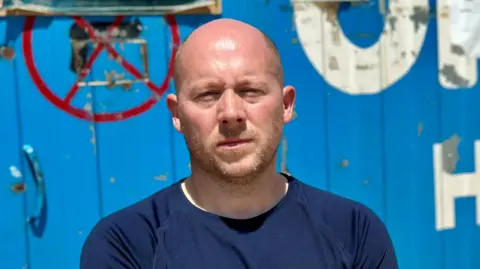 Mohamed Moawad, Al Jazeera's managing editor, called him the "only voice left in Gaza City," a city Israel now plans to militarily occupy. Raed Fakih, input manager at Al Jazeera Arabic, painted a vivid picture of a "courageous, dedicated, and honest" reporter whose integrity and dedication resonated with hundreds of thousands of followers worldwide. "His dedication took him to areas where no other reporter ventured... his integrity kept him true to his message."
Fakih revealed the personal toll Anas paid: "In our last conversations, he told me about the famine and starvation he was enduring, about how hard it is to survive with so little food... He felt he had no choice but to amplify the voice of the Gazans. He was living the same hardships they are living now, suffering from famine, mourning loved ones."
**He wasn't just reporting on the suffering; he was living it.** Like countless Gazans, he carried immense loss, pain, and an unyielding resilience. Even with death looming, he persisted, driven by the conviction that this was a story the world *must* hear.
Mohamed Moawad, Al Jazeera's managing editor, called him the "only voice left in Gaza City," a city Israel now plans to militarily occupy. Raed Fakih, input manager at Al Jazeera Arabic, painted a vivid picture of a "courageous, dedicated, and honest" reporter whose integrity and dedication resonated with hundreds of thousands of followers worldwide. "His dedication took him to areas where no other reporter ventured... his integrity kept him true to his message."
Fakih revealed the personal toll Anas paid: "In our last conversations, he told me about the famine and starvation he was enduring, about how hard it is to survive with so little food... He felt he had no choice but to amplify the voice of the Gazans. He was living the same hardships they are living now, suffering from famine, mourning loved ones."
**He wasn't just reporting on the suffering; he was living it.** Like countless Gazans, he carried immense loss, pain, and an unyielding resilience. Even with death looming, he persisted, driven by the conviction that this was a story the world *must* hear.
 The Allegations: A Smokescreen for Silence?
Israel swiftly accused Anas al-Sharif of being "the head of a Hamas terrorist cell," claiming he posed as a journalist while launching rocket attacks. They stated they had documents proving his "military affiliation" with Hamas, including personnel rosters and salary documents.
However, the evidence presented has been sparse, and the allegations have been vehemently rejected. Anas himself denied such claims before his death, as have Al Jazeera and powerful media rights groups. Jodie Ginsberg, CEO of the Committee for the Protection of Journalists (CPJ), was unequivocal: "International law is very clear... the only individuals who are legitimate targets during a war are active combatants. Having worked as a media advisor for Hamas, or indeed for Hamas currently, does not make you an active combatant." She added that Israel's evidence provided no assurance he was even an active Hamas member.
The Allegations: A Smokescreen for Silence?
Israel swiftly accused Anas al-Sharif of being "the head of a Hamas terrorist cell," claiming he posed as a journalist while launching rocket attacks. They stated they had documents proving his "military affiliation" with Hamas, including personnel rosters and salary documents.
However, the evidence presented has been sparse, and the allegations have been vehemently rejected. Anas himself denied such claims before his death, as have Al Jazeera and powerful media rights groups. Jodie Ginsberg, CEO of the Committee for the Protection of Journalists (CPJ), was unequivocal: "International law is very clear... the only individuals who are legitimate targets during a war are active combatants. Having worked as a media advisor for Hamas, or indeed for Hamas currently, does not make you an active combatant." She added that Israel's evidence provided no assurance he was even an active Hamas member.
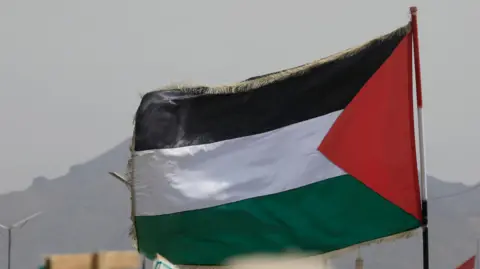 Reporters Without Borders (RSF), another leading **media freedom** organization, dismissed the allegations as "baseless" and demanded international intervention, warning of "more such extrajudicial murders of media professionals" without strong action.
A Dangerous Pattern: Is Journalism Itself on Trial?
Fakih from Al Jazeera didn't mince words, accusing the Israeli military of fabricating stories about **journalists killed** to "hide what [it] is committing in Gaza." He highlighted a "longstanding pattern," drawing a chilling parallel to the 2022 killing of veteran Palestinian-American journalist Shireen Abu Akleh during an Israeli army raid in the occupied West Bank. Though Israel deemed her death unintentional, Al Jazeera's evidence pointed to a "deliberate killing."
Reporters Without Borders (RSF), another leading **media freedom** organization, dismissed the allegations as "baseless" and demanded international intervention, warning of "more such extrajudicial murders of media professionals" without strong action.
A Dangerous Pattern: Is Journalism Itself on Trial?
Fakih from Al Jazeera didn't mince words, accusing the Israeli military of fabricating stories about **journalists killed** to "hide what [it] is committing in Gaza." He highlighted a "longstanding pattern," drawing a chilling parallel to the 2022 killing of veteran Palestinian-American journalist Shireen Abu Akleh during an Israeli army raid in the occupied West Bank. Though Israel deemed her death unintentional, Al Jazeera's evidence pointed to a "deliberate killing."
 "Here is a crucial fact," Fakih asserted, "had Israel been held accountable for Shireen's assassination, it would not have dared to kill 200 journalists in Gaza."
Anas al-Sharif was tragically aware of the danger. Months before his death, Israel’s Arabic-language spokesman posted a video accusing him of being a member of Hamas's military wing. Yet, he continued his work, embodying the spirit of his pre-written message, published on his X account after his death: "I gave every effort and all my strength to be a support and a voice for my people... Do not forget Gaza."
The deaths of Anas al-Sharif, Mohammed Qreiqeh, and their colleagues are not just isolated tragedies; they are a stark reminder of the immense risks faced by **war correspondents** and **media workers** in **conflict zones**. Their voices, their lenses, and their lives are vital to our understanding of the world. As the call for accountability grows louder, one question echoes in the void they left behind: **Who will be left to tell the stories if the truth-tellers are relentlessly silenced?**
"Here is a crucial fact," Fakih asserted, "had Israel been held accountable for Shireen's assassination, it would not have dared to kill 200 journalists in Gaza."
Anas al-Sharif was tragically aware of the danger. Months before his death, Israel’s Arabic-language spokesman posted a video accusing him of being a member of Hamas's military wing. Yet, he continued his work, embodying the spirit of his pre-written message, published on his X account after his death: "I gave every effort and all my strength to be a support and a voice for my people... Do not forget Gaza."
The deaths of Anas al-Sharif, Mohammed Qreiqeh, and their colleagues are not just isolated tragedies; they are a stark reminder of the immense risks faced by **war correspondents** and **media workers** in **conflict zones**. Their voices, their lenses, and their lives are vital to our understanding of the world. As the call for accountability grows louder, one question echoes in the void they left behind: **Who will be left to tell the stories if the truth-tellers are relentlessly silenced?**
Image 1
Image 2
Image 3
Image 4
Image 5
Image 6


Comments
Post a Comment