Croatia Divided: Ultra-Nationalist Concert Sparks Outrage
Croatia's Divided Soul: When a Concert Chant Ignites a Nation's Past
Imagine a stadium erupting with hundreds of thousands of voices, not just for the music, but for a chant that echoes a dark, fascist past. This isn't a historical footnote; it's a raw, modern reality in Croatia, where a single phrase can tear a nation in two, revealing fault lines reaching back to World War Two and the brutal 1990s independence war.
Last month, ultra-nationalist singer Marko Perkovic, known by his stage name Thompson, staged a mega-gig in Zagreb. Was it a "neo-fascist Croatian Woodstock" or simply patriotic, anti-establishment fun? The answer depends on which side of Croatia's deep political divide you stand. This event wasn't just a concert; it was a dramatic spotlight on the wildly differing interpretations of the country's struggle for independence and the chilling history of the Independent State of Croatia (NDH), a World War Two-era Nazi puppet state.
A Sea of Humanity, A Fiery Chant: The Thompson Phenomenon
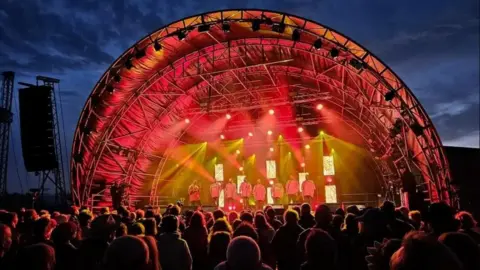
 While Thompson's management boldly claimed over half a million tickets sold for the show at Zagreb Hippodrome, the actual attendance – still numbering in the **hundreds of thousands** – painted an undeniable picture of his immense drawing power. It was an enormous crowd, a pulsating sea of humanity, and they were ready.
As Thompson launched into his opening number, "Čavoglave Battalion," the collective energy surged. To his cry of "Za dom" ("for homeland"), the audience roared back with thunderous uniformity: "Spremni!" ("ready!"). Even prominent Members of Parliament from the governing HDZ party were observed chanting along, further blurring the lines between politics and performance.
But what was truly being celebrated that night, and what chilling echoes did this particular chant stir?
The Echo of a Forbidden Past: "Za Dom, Spremni!"
While Thompson's management boldly claimed over half a million tickets sold for the show at Zagreb Hippodrome, the actual attendance – still numbering in the **hundreds of thousands** – painted an undeniable picture of his immense drawing power. It was an enormous crowd, a pulsating sea of humanity, and they were ready.
As Thompson launched into his opening number, "Čavoglave Battalion," the collective energy surged. To his cry of "Za dom" ("for homeland"), the audience roared back with thunderous uniformity: "Spremni!" ("ready!"). Even prominent Members of Parliament from the governing HDZ party were observed chanting along, further blurring the lines between politics and performance.
But what was truly being celebrated that night, and what chilling echoes did this particular chant stir?
The Echo of a Forbidden Past: "Za Dom, Spremni!"
 This seemingly innocuous exchange – "Za dom, spremni!" – has ignited a furious debate, outraging opposition parties and organizations dedicated to human rights and regional reconciliation. They point to an undeniable, legally recognized fact: this chant originated with the anti-Semitic, Nazi-allied Ustasha organization during World War Two.
Croatia's Constitutional Court has explicitly ruled that the phrase "is an Ustasha salute of the Independent State of Croatia [which is] not in accordance with the Constitution of the Republic of Croatia."
"This has opened Pandora's box," warns Tena Banjeglav of Documenta – Centre for Dealing with the Past, an organization committed to factual reconciliation regarding both World War Two and the more recent war of independence. "You've now got politicians in parliament screaming 'Za dom, spremni'. On the streets, kids are singing not only that song, but other songs Thompson used to sing which glorify mass crimes in World War Two."
Banjeglav fears a dangerous trend: "The government is creating an atmosphere when this is a positive thing. It is creating a wave of nationalism which could explode into physical violence."
This seemingly innocuous exchange – "Za dom, spremni!" – has ignited a furious debate, outraging opposition parties and organizations dedicated to human rights and regional reconciliation. They point to an undeniable, legally recognized fact: this chant originated with the anti-Semitic, Nazi-allied Ustasha organization during World War Two.
Croatia's Constitutional Court has explicitly ruled that the phrase "is an Ustasha salute of the Independent State of Croatia [which is] not in accordance with the Constitution of the Republic of Croatia."
"This has opened Pandora's box," warns Tena Banjeglav of Documenta – Centre for Dealing with the Past, an organization committed to factual reconciliation regarding both World War Two and the more recent war of independence. "You've now got politicians in parliament screaming 'Za dom, spremni'. On the streets, kids are singing not only that song, but other songs Thompson used to sing which glorify mass crimes in World War Two."
Banjeglav fears a dangerous trend: "The government is creating an atmosphere when this is a positive thing. It is creating a wave of nationalism which could explode into physical violence."
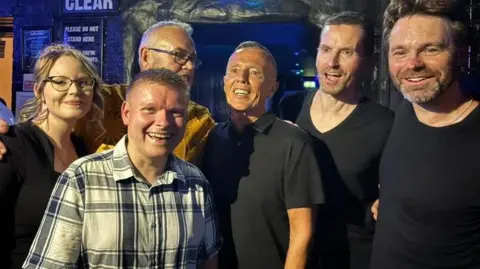
 Indeed, the government has largely downplayed the controversy. Prime Minister Andrej Plenkovic dismissed the chanting as merely "part of Thompson's repertoire" and even posed for a photo with the singer the day before the Zagreb spectacle.
History's Battleground: Patriotism vs. Fascism
Not everyone agrees with the condemnation. Conservative commentator Matija Štahan argues that Thompson's service as a soldier during the 1990s independence war grants him the right to use "Za dom, spremni" in his work.
"It is an authentic outcry for freedom against aggression," Štahan asserts. "Many journalists in the West say it's the Croatian version of 'Heil Hitler' – but it would be best to describe it as the Croatian version of [the Ukrainian national salute] 'Slava Ukraini'."
Indeed, the government has largely downplayed the controversy. Prime Minister Andrej Plenkovic dismissed the chanting as merely "part of Thompson's repertoire" and even posed for a photo with the singer the day before the Zagreb spectacle.
History's Battleground: Patriotism vs. Fascism
Not everyone agrees with the condemnation. Conservative commentator Matija Štahan argues that Thompson's service as a soldier during the 1990s independence war grants him the right to use "Za dom, spremni" in his work.
"It is an authentic outcry for freedom against aggression," Štahan asserts. "Many journalists in the West say it's the Croatian version of 'Heil Hitler' – but it would be best to describe it as the Croatian version of [the Ukrainian national salute] 'Slava Ukraini'."
 He draws a parallel: "Both rose to prominence in the context of World War Two – which was a war for many small nations who wanted their own independent states. Symbols change their meaning – and just like 'Slava Ukraini', 'Za dom, spremni' also means something different. Today, it's an anti-establishment nationalist slogan. It's against the Croatian politically-correct post-communist political elite. Young people want to shout it as something that's subversive."
This reinterpretation, however, garners no sympathy from the Youth Initiative for Human Rights (YIHR), a regional organization striving for reconciliation among younger generations in the Western Balkans.
"It is clearly a fascist slogan," states Mario Mažić, YIHR's director in Croatia. "As an EU member state, Croatia should be an example for the rest of the region, but it has not dealt with the past. It identifies with the losing side in World War Two, doesn't recognise it waged an unjust war in Bosnia and refuses to acknowledge systematic crimes against Serbs."
A Wider Lens: Nationalism, Distraction, and Europe's Conscience
He draws a parallel: "Both rose to prominence in the context of World War Two – which was a war for many small nations who wanted their own independent states. Symbols change their meaning – and just like 'Slava Ukraini', 'Za dom, spremni' also means something different. Today, it's an anti-establishment nationalist slogan. It's against the Croatian politically-correct post-communist political elite. Young people want to shout it as something that's subversive."
This reinterpretation, however, garners no sympathy from the Youth Initiative for Human Rights (YIHR), a regional organization striving for reconciliation among younger generations in the Western Balkans.
"It is clearly a fascist slogan," states Mario Mažić, YIHR's director in Croatia. "As an EU member state, Croatia should be an example for the rest of the region, but it has not dealt with the past. It identifies with the losing side in World War Two, doesn't recognise it waged an unjust war in Bosnia and refuses to acknowledge systematic crimes against Serbs."
A Wider Lens: Nationalism, Distraction, and Europe's Conscience
 The controversy isn't confined to Zagreb. Thompson staged another massive show in Krajina, a region that served as a stronghold for Croatian Serbs during the war of independence. This performance was part of the 30th-anniversary celebrations of Operation Storm, the military action that ended Croatia's war from Yugoslavia but also resulted in the displacement of hundreds of thousands of Serbs.
In recent years, the government had begun to include commemorations for Serb victims, a step towards healing. Now, reconciliation seems to be taking a back seat to the promotion of **nationalist sentiment**, highlighted by a military parade in Zagreb that served as this year's main event.
Historian Tvrtko Jakovina believes these nationalist displays have become more visible, especially since the UK's departure from the European Union. "Because when it comes to anti-fascist values, it can't be only up to Germany to protect them," he observes.
Jakovina suggests this resurgence of historical revisionism and nationalism is a convenient distraction for a government seemingly without answers to the numerous challenges facing contemporary Croatia.
The controversy isn't confined to Zagreb. Thompson staged another massive show in Krajina, a region that served as a stronghold for Croatian Serbs during the war of independence. This performance was part of the 30th-anniversary celebrations of Operation Storm, the military action that ended Croatia's war from Yugoslavia but also resulted in the displacement of hundreds of thousands of Serbs.
In recent years, the government had begun to include commemorations for Serb victims, a step towards healing. Now, reconciliation seems to be taking a back seat to the promotion of **nationalist sentiment**, highlighted by a military parade in Zagreb that served as this year's main event.
Historian Tvrtko Jakovina believes these nationalist displays have become more visible, especially since the UK's departure from the European Union. "Because when it comes to anti-fascist values, it can't be only up to Germany to protect them," he observes.
Jakovina suggests this resurgence of historical revisionism and nationalism is a convenient distraction for a government seemingly without answers to the numerous challenges facing contemporary Croatia.
 "In the summer of 2025, we don't talk about the problems with our tourism, climate change, non-existent industry, higher education – or the demographic catastrophe that's looming," he laments. "Instead, we're talking about the military parade and two Thompson concerts."
As Croatia grapples with these ghosts of the past, what message does its embrace of controversial symbols send to a region still healing from its own conflicts, and to a Europe that vowed "never again"? The stage is set, the chant still echoes, and the battle for Croatia's soul continues.
"In the summer of 2025, we don't talk about the problems with our tourism, climate change, non-existent industry, higher education – or the demographic catastrophe that's looming," he laments. "Instead, we're talking about the military parade and two Thompson concerts."
As Croatia grapples with these ghosts of the past, what message does its embrace of controversial symbols send to a region still healing from its own conflicts, and to a Europe that vowed "never again"? The stage is set, the chant still echoes, and the battle for Croatia's soul continues.
Image 1
Image 2
Image 3
Image 4
Image 5
Image 6


Comments
Post a Comment