Trump's Ceasefire Pivot: Ukraine's Alarm
The "Peace Deal" That Shook Europe: Why Trump's Latest Move Leaves Ukraine Vulnerable
Imagine a **peace agreement** so controversial, it sends shivers down the spines of European leaders and leaves a wartime president reeling. That's precisely the situation after the much-anticipated Alaska "quasi-summit" – a meeting many hoped would pave the way for an immediate end to the brutal **Russia-Ukraine war**. Instead, it delivered a shocking twist: US President **Donald Trump** seemingly abandoned the urgent call for a **ceasefire**, embracing a vision of peace eerily similar to Moscow's long-held demands.
Was this a diplomatic masterstroke or a dangerous misstep that buys **Vladimir Putin** precious time on the battlefield? The implications for global stability and the future of Ukraine are staggering.
 Alaska's Aftermath: A Ceasefire Derailed?
The buzz around the Alaska talks was palpable. Expectations were high, especially given President Trump's prior declaration that an "immediate ceasefire" was his paramount goal. Yet, as the dust settled, the stark reality emerged: no such deal materialized. In fact, Trump's pivot away from an immediate halt to hostilities sent a shockwave of dismay across Kyiv and European capitals.
Why the sudden shift? Russia's long-standing position is clear: a true **peace agreement** can only emerge from a "comprehensive settlement" that explicitly accounts for Russian interests – a position many interpret as veiled demand for Ukraine's capitulation. And, once again, Trump appears to have endorsed this controversial stance.
Alaska's Aftermath: A Ceasefire Derailed?
The buzz around the Alaska talks was palpable. Expectations were high, especially given President Trump's prior declaration that an "immediate ceasefire" was his paramount goal. Yet, as the dust settled, the stark reality emerged: no such deal materialized. In fact, Trump's pivot away from an immediate halt to hostilities sent a shockwave of dismay across Kyiv and European capitals.
Why the sudden shift? Russia's long-standing position is clear: a true **peace agreement** can only emerge from a "comprehensive settlement" that explicitly accounts for Russian interests – a position many interpret as veiled demand for Ukraine's capitulation. And, once again, Trump appears to have endorsed this controversial stance.
 Putin's Playbook: What Russia Truly Demands
For months, Russia's terms for peace have been anything but subtle. They reportedly include the withdrawal of Ukrainian forces from strategic areas of the eastern **Donbas region** not currently under Russian control. In return, Moscow *might* agree to freeze current front lines further south, in Zaporizhzhia and Kherson. This, critics argue, rewards aggression and legitimizes territorial grabs.
Trump himself confirmed his new direction on Truth Social, writing, "It was determined by all that the best way to end the horrific war between Russia and Ukraine is to go directly to a peace agreement." He dismissed ceasefires as something that "often times do not hold up."
Putin's Playbook: What Russia Truly Demands
For months, Russia's terms for peace have been anything but subtle. They reportedly include the withdrawal of Ukrainian forces from strategic areas of the eastern **Donbas region** not currently under Russian control. In return, Moscow *might* agree to freeze current front lines further south, in Zaporizhzhia and Kherson. This, critics argue, rewards aggression and legitimizes territorial grabs.
Trump himself confirmed his new direction on Truth Social, writing, "It was determined by all that the best way to end the horrific war between Russia and Ukraine is to go directly to a peace agreement." He dismissed ceasefires as something that "often times do not hold up."
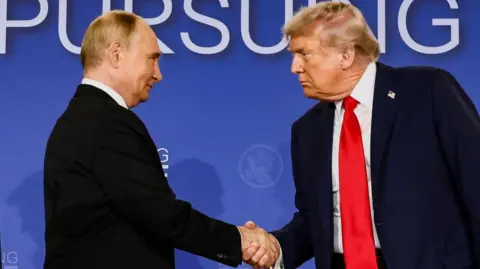 But what exactly does "peace" mean when the world's most powerful nations clash, and one side refuses to cede an inch?
A Battle of Wills: Kyiv's Unwavering Stance
This American position flies directly in the face of Ukraine's core demand, championed by all its European backers: an unconditional ceasefire *must* come first. For **Volodymyr Zelensky** and his allies, a ceasefire isn't just a pause; it's a crucial step to de-escalate, save lives, and create space for genuine negotiations, free from battlefield pressure.
But what exactly does "peace" mean when the world's most powerful nations clash, and one side refuses to cede an inch?
A Battle of Wills: Kyiv's Unwavering Stance
This American position flies directly in the face of Ukraine's core demand, championed by all its European backers: an unconditional ceasefire *must* come first. For **Volodymyr Zelensky** and his allies, a ceasefire isn't just a pause; it's a crucial step to de-escalate, save lives, and create space for genuine negotiations, free from battlefield pressure.
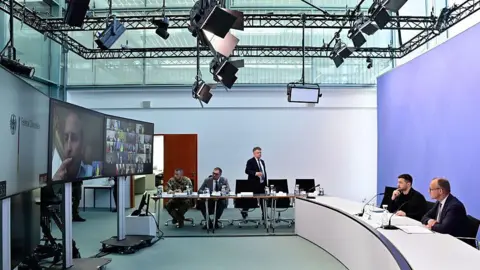 Matthew Savill, director of military sciences at the Royal United Services Institute, notes the chilling reality: "If Putin's military objective was to avoid immediate constraints on Russian operations in Ukraine then he appears to have succeeded." By bypassing a ceasefire, Trump may have inadvertently granted Putin exactly what he wanted – more time to press his advantage.
Ian Bond, a former British diplomat and deputy director of the Centre for European Reform, minced no words about Moscow's territorial demands: "If Trump thinks that Zelensky is going to agree to give up the fortress cities of the Donetsk oblast, just to get Putin to stop making war on him, he's out of his mind. It shows how little he still understands about the situation and the geography of Ukraine."
Zelensky's Tightrope Walk: Diplomacy Under Duress
Matthew Savill, director of military sciences at the Royal United Services Institute, notes the chilling reality: "If Putin's military objective was to avoid immediate constraints on Russian operations in Ukraine then he appears to have succeeded." By bypassing a ceasefire, Trump may have inadvertently granted Putin exactly what he wanted – more time to press his advantage.
Ian Bond, a former British diplomat and deputy director of the Centre for European Reform, minced no words about Moscow's territorial demands: "If Trump thinks that Zelensky is going to agree to give up the fortress cities of the Donetsk oblast, just to get Putin to stop making war on him, he's out of his mind. It shows how little he still understands about the situation and the geography of Ukraine."
Zelensky's Tightrope Walk: Diplomacy Under Duress
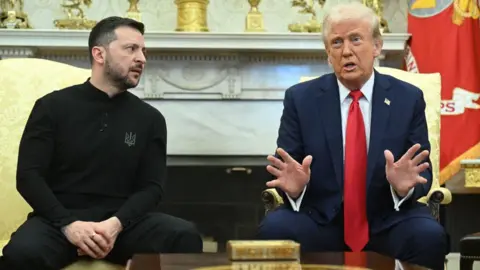
 In the immediate aftermath of the Alaska meeting, European leaders held their breath, frantically trying to assess the damage. Trump, true to his word, called President Zelensky. The hour-long conversation, later joined by European leaders, was described by Zelensky as "long and substantive." He even announced a trip to Washington on Monday – his first since a "disastrous" Oval Office encounter in February.
"I am grateful for the invitation," Zelensky posted, adding, "it is important that America's strength has an impact on the situation."
Yet, a later post, after Trump's Truth Social statement, revealed a more urgent, almost desperate tone: "Killings must stop as soon as possible. The fire must cease both on the battlefield and in the sky, as well as against our port infrastructure." The stark contrast highlighted the intense pressure Zelensky faces.
In the immediate aftermath of the Alaska meeting, European leaders held their breath, frantically trying to assess the damage. Trump, true to his word, called President Zelensky. The hour-long conversation, later joined by European leaders, was described by Zelensky as "long and substantive." He even announced a trip to Washington on Monday – his first since a "disastrous" Oval Office encounter in February.
"I am grateful for the invitation," Zelensky posted, adding, "it is important that America's strength has an impact on the situation."
Yet, a later post, after Trump's Truth Social statement, revealed a more urgent, almost desperate tone: "Killings must stop as soon as possible. The fire must cease both on the battlefield and in the sky, as well as against our port infrastructure." The stark contrast highlighted the intense pressure Zelensky faces.
 Europe's High-Stakes Balancing Act: The "Trump Whisperers" Return
Europe's "Trump whisperers" — experienced diplomats adept at navigating the former president's mercurial temperament — were back at work. Their mission: underscore the vital importance of Ukraine's involvement in any discussions about its future, while carefully, publicly, appreciating Trump's efforts.
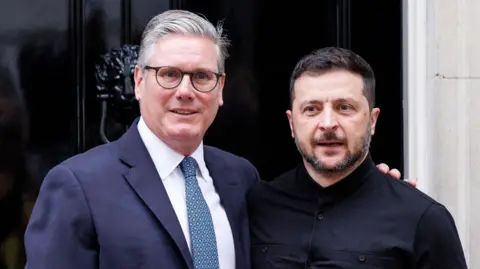
Sir Keir Starmer, the UK's Prime Minister, lauded Trump's initiatives, saying, "President Trump's efforts have brought us closer than ever before to ending Russia's illegal war in Ukraine." He also welcomed the "openness" of the US and Europe to provide "robust **security guarantees**" for Ukraine in the event of a deal.
Europe's High-Stakes Balancing Act: The "Trump Whisperers" Return
Europe's "Trump whisperers" — experienced diplomats adept at navigating the former president's mercurial temperament — were back at work. Their mission: underscore the vital importance of Ukraine's involvement in any discussions about its future, while carefully, publicly, appreciating Trump's efforts.
Sir Keir Starmer, the UK's Prime Minister, lauded Trump's initiatives, saying, "President Trump's efforts have brought us closer than ever before to ending Russia's illegal war in Ukraine." He also welcomed the "openness" of the US and Europe to provide "robust **security guarantees**" for Ukraine in the event of a deal.
 But what do these guarantees truly mean? And can they really protect Ukraine without formal **NATO security**?
The Credibility Gap: A Promise of Protection?
Reports hinted at discussions of security guarantees "inspired by Nato's Article 5" – the alliance's collective defense clause – but *outside* full NATO membership. Trump reportedly indicated the US would act if Russia launched another attack.
But what do these guarantees truly mean? And can they really protect Ukraine without formal **NATO security**?
The Credibility Gap: A Promise of Protection?
Reports hinted at discussions of security guarantees "inspired by Nato's Article 5" – the alliance's collective defense clause – but *outside* full NATO membership. Trump reportedly indicated the US would act if Russia launched another attack.
 However, many experts remain deeply skeptical. Ivo Daalder, a former US ambassador to NATO, bluntly stated it was "just not credible" for Ukraine to receive such protection without joining the alliance. "I don't believe that President Trump is willing to go to war against Russia to protect Ukraine," he told the BBC.
The sudden shift in US **foreign policy** has left European capitals reeling, grappling with how to reconcile these new realities with their united front for Ukraine.
Putin's Silent Victory: A Diplomatic Coup?
However, many experts remain deeply skeptical. Ivo Daalder, a former US ambassador to NATO, bluntly stated it was "just not credible" for Ukraine to receive such protection without joining the alliance. "I don't believe that President Trump is willing to go to war against Russia to protect Ukraine," he told the BBC.
The sudden shift in US **foreign policy** has left European capitals reeling, grappling with how to reconcile these new realities with their united front for Ukraine.
Putin's Silent Victory: A Diplomatic Coup?
 Even without a formal agreement, the Alaska "quasi-summit" was a cost-free win for Putin. It marked the return of an international pariah to the global stage, lending a veneer of legitimacy. The threat of increased US **international sanctions** on Moscow also receded, with Trump indicating it could be weeks before he even considers them.
This complex backdrop raises a host of unsettling questions for Zelensky as he prepares for his Washington visit. Will he face another "ambush" in DC, as some predict?
When Fox's Sean Hannity asked Trump for his advice to Ukraine, the reply was stark and simple: "Make a deal. Russia's a very big power and they're not."
Even without a formal agreement, the Alaska "quasi-summit" was a cost-free win for Putin. It marked the return of an international pariah to the global stage, lending a veneer of legitimacy. The threat of increased US **international sanctions** on Moscow also receded, with Trump indicating it could be weeks before he even considers them.
This complex backdrop raises a host of unsettling questions for Zelensky as he prepares for his Washington visit. Will he face another "ambush" in DC, as some predict?
When Fox's Sean Hannity asked Trump for his advice to Ukraine, the reply was stark and simple: "Make a deal. Russia's a very big power and they're not."
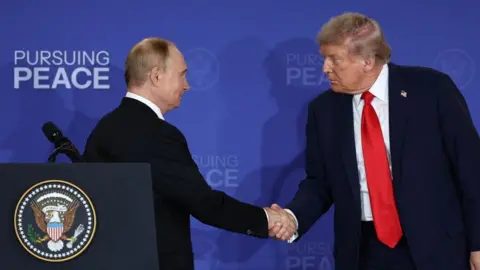 As the world watches, the high-stakes chess match for Ukraine's future continues, shrouded in uncertainty and the looming shadow of a "peace" that may demand an impossible price. What will come of Zelensky's Washington visit? The answer could redefine the future of **geopolitical strategy** for decades to come.
Image 1
Image 2
Image 3
Image 4
Image 5
Image 6
Image 7
Image 8
Image 9
Image 10


Comments
Post a Comment