Trump's Ceasefire Shift: Urges Ukraine-Russia Peace Deal
**A Seismic Shift in the Shadow of War: Trump's Unexpected Peace Push Challenges Ukraine's Vision**
Imagine a world leader, fresh from a high-stakes summit, declaring a radical new path to end a devastating war – a path that bypasses the very first step the embattled nation has pleaded for. This isn't a hypothetical. This is the urgent, unfolding reality as **Donald Trump** pivots his strategy for the **Ukraine war**, urging President **Volodymyr Zelensky** to bypass a **ceasefire** and leap straight into a **Russia peace deal**. But what exactly did this unexpected shift mean for Ukraine's future, and could peace truly be brokered without halting the bloodshed first?
The diplomatic tremors began with a highly anticipated meeting between Trump and Russian President **Vladimir Putin**, after which the landscape of **peace talks** dramatically changed. As the world watches, the critical question looms: can a sustainable peace be forged when the very party under attack feels sidelined, and the aggressor shows no sign of stopping the killing?
***
Zelensky's Defiant Stance: No Peace Without an End to Killing
For Ukrainian President Volodymyr Zelensky, the path to peace is clear, and it begins with silence. He has repeatedly voiced his nation's frustration, stating plainly that Russia's "numerous calls for a ceasefire" and its refusal to "determine when it will stop the killing" are actively "complicating the situation."
 In a stark statement on 'X', Zelensky outlined the bedrock principles for any "truly sustainable and reliable peace" with Moscow:
* **A credible security guarantee:** Ukraine demands assurance against future aggression.
* **Return of abducted children:** A painful and non-negotiable demand for the return of children "abducted from occupied territories" by the Kremlin.
For Ukraine, the cessation of hostilities is not a minor detail; it is the essential precondition for any meaningful dialogue about a longer-term settlement. Yet, the new proposals on the table seem to suggest otherwise.
***
Trump's Bold Gambit: Bypassing the Bloodshed for a Swift Resolution?
Just days ago, ahead of his summit with President Putin, Donald Trump had expressed a desire for a "rapidly" negotiated **ceasefire** in Ukraine. Now, following his face-to-face discussions with the Russian leader, his position has undergone a dramatic transformation.
In a stark statement on 'X', Zelensky outlined the bedrock principles for any "truly sustainable and reliable peace" with Moscow:
* **A credible security guarantee:** Ukraine demands assurance against future aggression.
* **Return of abducted children:** A painful and non-negotiable demand for the return of children "abducted from occupied territories" by the Kremlin.
For Ukraine, the cessation of hostilities is not a minor detail; it is the essential precondition for any meaningful dialogue about a longer-term settlement. Yet, the new proposals on the table seem to suggest otherwise.
***
Trump's Bold Gambit: Bypassing the Bloodshed for a Swift Resolution?
Just days ago, ahead of his summit with President Putin, Donald Trump had expressed a desire for a "rapidly" negotiated **ceasefire** in Ukraine. Now, following his face-to-face discussions with the Russian leader, his position has undergone a dramatic transformation.
 Writing on Truth Social, Trump declared his intent to "bypass a ceasefire" altogether, moving "directly to a permanent peace agreement" as "the best way to end the horrific war between Russia and Ukraine." His reasoning? Ceasefires, he asserted, often "do not hold up." This radical departure from traditional diplomacy – and Ukraine's primary demand – immediately sent shockwaves through the international community.
After a phone call with Trump post-summit, Zelensky reiterated his call for a "real, lasting peace," but underscored that "the fire must cease" and the killings must stop. The divergence in approaches could not be starker.
***
The Putin Proposal: A Dangerous Bargain for Ukraine?
The details of a potential **Russia peace deal** began to emerge, painting a concerning picture for Kyiv. Vladimir Putin reportedly presented Trump with an offer: Ukraine would withdraw from the **Donetsk region** of the **Donbas**, and in return, Russia would freeze the front lines in Zaporizhzhia and Kherson.
This proposal comes against a backdrop of complex history and ongoing conflict:
Writing on Truth Social, Trump declared his intent to "bypass a ceasefire" altogether, moving "directly to a permanent peace agreement" as "the best way to end the horrific war between Russia and Ukraine." His reasoning? Ceasefires, he asserted, often "do not hold up." This radical departure from traditional diplomacy – and Ukraine's primary demand – immediately sent shockwaves through the international community.
After a phone call with Trump post-summit, Zelensky reiterated his call for a "real, lasting peace," but underscored that "the fire must cease" and the killings must stop. The divergence in approaches could not be starker.
***
The Putin Proposal: A Dangerous Bargain for Ukraine?
The details of a potential **Russia peace deal** began to emerge, painting a concerning picture for Kyiv. Vladimir Putin reportedly presented Trump with an offer: Ukraine would withdraw from the **Donetsk region** of the **Donbas**, and in return, Russia would freeze the front lines in Zaporizhzhia and Kherson.
This proposal comes against a backdrop of complex history and ongoing conflict:
 * Russia illegally annexed **Crimea** from Ukraine in 2014.
* Eight years later, in 2022, it launched a full-scale invasion.
* Russia claims the entire **Donbas** as its territory, already controlling most of Luhansk and about 70% of Donetsk.
Trump, who had previously indicated that any peace deal might involve "some swapping of territories," is said to have relayed Putin's offer directly to Zelensky. However, just days before this development, the Ukrainian president had vehemently ruled out ceding control of the Donbas, warning it could serve as a dangerous "springboard for future Russian attacks." The implications of accepting such a deal are profound, raising fears of legitimizing territorial grabs and inviting future aggression.
***
European Alarm Bells: Pressure Mounts on Zelensky
The prospect of Trump pressuring Zelensky into an agreement discussed solely between the American and Russian presidents has ignited significant concern among European allies. Citing diplomatic sources, CBS, a US partner of the BBC, reported that European diplomats were deeply worried about Trump's upcoming meeting with Zelensky in Washington D.C. on Monday.
Sources indicated that Trump had told European leaders that Putin would make "some concessions," yet failed to specify what these might entail. The worry is palpable: could Ukraine be strong-armed into a deal without its full agency?
* Russia illegally annexed **Crimea** from Ukraine in 2014.
* Eight years later, in 2022, it launched a full-scale invasion.
* Russia claims the entire **Donbas** as its territory, already controlling most of Luhansk and about 70% of Donetsk.
Trump, who had previously indicated that any peace deal might involve "some swapping of territories," is said to have relayed Putin's offer directly to Zelensky. However, just days before this development, the Ukrainian president had vehemently ruled out ceding control of the Donbas, warning it could serve as a dangerous "springboard for future Russian attacks." The implications of accepting such a deal are profound, raising fears of legitimizing territorial grabs and inviting future aggression.
***
European Alarm Bells: Pressure Mounts on Zelensky
The prospect of Trump pressuring Zelensky into an agreement discussed solely between the American and Russian presidents has ignited significant concern among European allies. Citing diplomatic sources, CBS, a US partner of the BBC, reported that European diplomats were deeply worried about Trump's upcoming meeting with Zelensky in Washington D.C. on Monday.
Sources indicated that Trump had told European leaders that Putin would make "some concessions," yet failed to specify what these might entail. The worry is palpable: could Ukraine be strong-armed into a deal without its full agency?
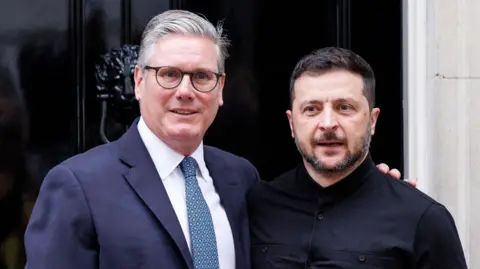 Ahead of the Trump-Putin summit, German Chancellor Friedrich Merz hosted a virtual meeting with Zelensky and other European leaders, including French President Emmanuel Macron and European Commission President Ursula von der Leyen. These leaders have been unequivocal: "the next step must now be further talks including President Zelensky." They stressed that "international borders must not be changed by force" and reaffirmed their readiness to "uphold the pressure on Russia."
UK Prime Minister Keir Starmer, while praising Trump's efforts for bringing the world "closer than ever before" to peace, echoed the sentiment: "The path to peace in Ukraine cannot be decided without him."
***
What Did the Summit Accomplish? Putin's Perspective
Following the summit, little in the way of a concrete agreement was announced by either president. Yet, both insisted on progress. Trump maintained that "progress had been made."
On Saturday, Vladimir Putin described the summit as "very useful," stating he had been able to "set out our position" to Trump. He emphasized the opportunity to "talk about the genesis, about the causes of this crisis," asserting that the "elimination of these root causes should be the basis for settlement." A senior Russian diplomat, Dmitry Polyanskiy, later echoed this, calling the summit "a very important building block for further efforts" and suggesting that "everybody who wants peace should be satisfied by the outcome." However, he notably declined to say if Putin should now meet with Zelensky.
Ahead of the Trump-Putin summit, German Chancellor Friedrich Merz hosted a virtual meeting with Zelensky and other European leaders, including French President Emmanuel Macron and European Commission President Ursula von der Leyen. These leaders have been unequivocal: "the next step must now be further talks including President Zelensky." They stressed that "international borders must not be changed by force" and reaffirmed their readiness to "uphold the pressure on Russia."
UK Prime Minister Keir Starmer, while praising Trump's efforts for bringing the world "closer than ever before" to peace, echoed the sentiment: "The path to peace in Ukraine cannot be decided without him."
***
What Did the Summit Accomplish? Putin's Perspective
Following the summit, little in the way of a concrete agreement was announced by either president. Yet, both insisted on progress. Trump maintained that "progress had been made."
On Saturday, Vladimir Putin described the summit as "very useful," stating he had been able to "set out our position" to Trump. He emphasized the opportunity to "talk about the genesis, about the causes of this crisis," asserting that the "elimination of these root causes should be the basis for settlement." A senior Russian diplomat, Dmitry Polyanskiy, later echoed this, calling the summit "a very important building block for further efforts" and suggesting that "everybody who wants peace should be satisfied by the outcome." However, he notably declined to say if Putin should now meet with Zelensky.
 ***
Kyiv's Crushing Reality: A "Spectacle" of Red Carpets
Back in Kyiv, the scenes from the Alaska summit left many Ukrainians feeling "crushed." Serhii Orlyk, a 50-year-old veteran from the eastern Donetsk region, articulated the painful irony: "I understand that for negotiations you shake hands, you can't just slap Putin in the face when he arrives. But this spectacle with the red carpet and the kneeling soldiers, it's terrible, it makes no sense."
This sentiment highlights a stark disconnect between the high-level diplomatic maneuvers and the lived experience of those on the ground, for whom the war is a daily, brutal reality.
***
The Road Ahead: An Uncertain Path to Peace
***
Kyiv's Crushing Reality: A "Spectacle" of Red Carpets
Back in Kyiv, the scenes from the Alaska summit left many Ukrainians feeling "crushed." Serhii Orlyk, a 50-year-old veteran from the eastern Donetsk region, articulated the painful irony: "I understand that for negotiations you shake hands, you can't just slap Putin in the face when he arrives. But this spectacle with the red carpet and the kneeling soldiers, it's terrible, it makes no sense."
This sentiment highlights a stark disconnect between the high-level diplomatic maneuvers and the lived experience of those on the ground, for whom the war is a daily, brutal reality.
***
The Road Ahead: An Uncertain Path to Peace
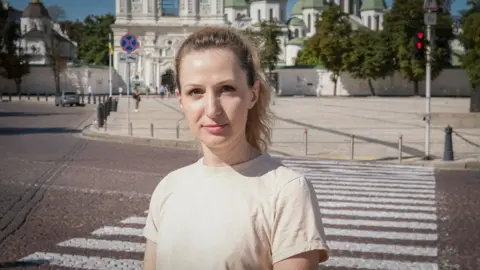 As President Zelensky prepares for his pivotal visit to Washington D.C. and the "coalition of the willing" – including the UK, France, and Germany – convenes to discuss strengthened support for Ukraine, the path to peace remains fraught with tension and conflicting visions.
Will President Trump succeed in his audacious bid to fast-track a peace deal, or will Zelensky stand firm on his demands for a **credible security guarantee** and an immediate halt to the brutal killings? The world watches, waiting to see if a truly lasting peace can emerge from this tangled web of diplomacy, or if the war in Ukraine is set to enter an even more unpredictable chapter.
As President Zelensky prepares for his pivotal visit to Washington D.C. and the "coalition of the willing" – including the UK, France, and Germany – convenes to discuss strengthened support for Ukraine, the path to peace remains fraught with tension and conflicting visions.
Will President Trump succeed in his audacious bid to fast-track a peace deal, or will Zelensky stand firm on his demands for a **credible security guarantee** and an immediate halt to the brutal killings? The world watches, waiting to see if a truly lasting peace can emerge from this tangled web of diplomacy, or if the war in Ukraine is set to enter an even more unpredictable chapter.
Image 1
Image 2
Image 3
Image 4
Image 5
Image 6


Comments
Post a Comment